"We are stubborn entrepreneurs"
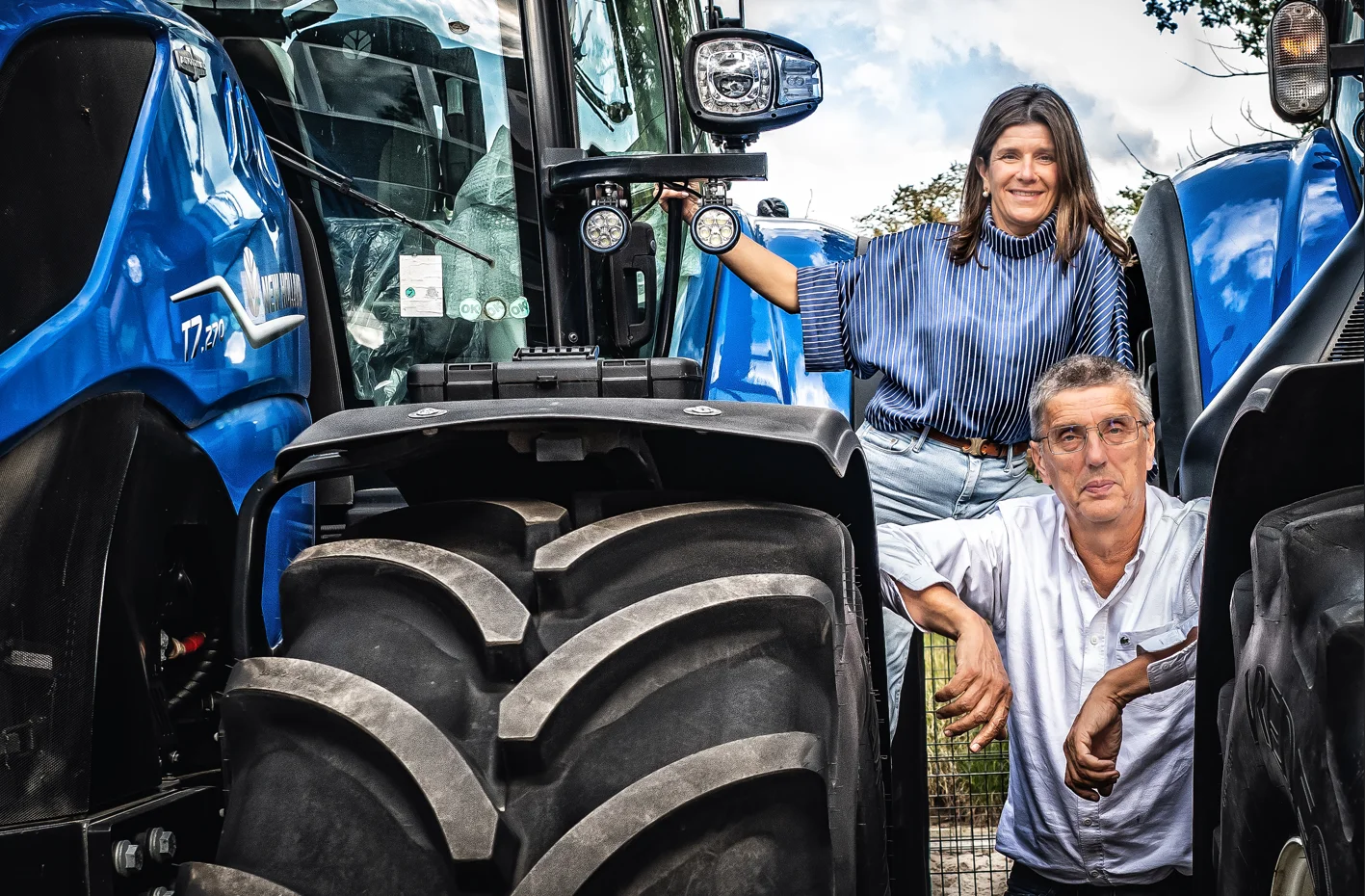
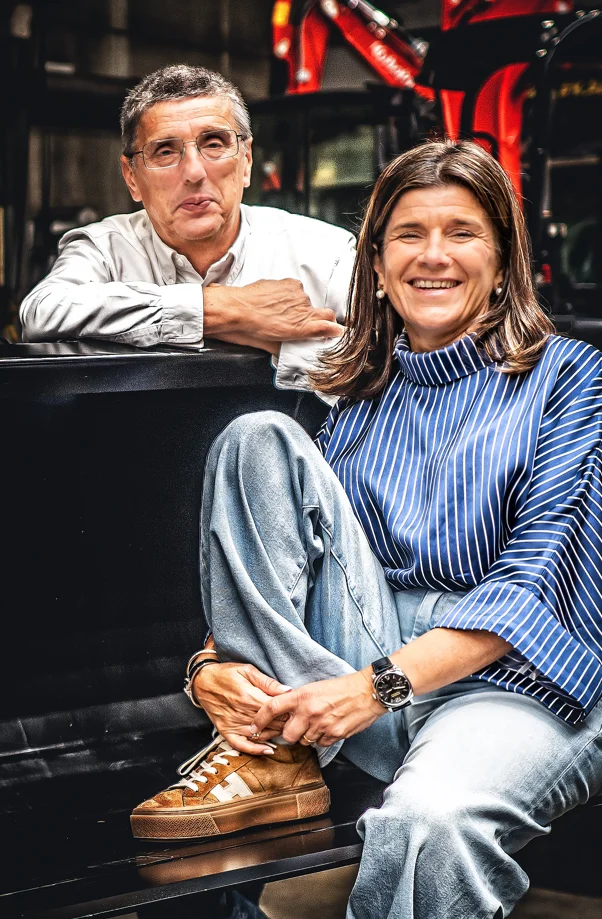
Thursday, November 12, 2026Chantal Luyckx is preparing to take over from her brother Jos at Groep Luyckx, the family business in the Kempen region that has grown through the sale of excavators. Today, they are the preferred supplier of specialised and customised machinery to the country’s largest construction firms. Yet they never forget their roots. Whether it’s a farmer driving his tractor into the workshop or a machine on a prestigious construction project on the other side of the world: every customer deserves the same attention, service and commitment. “People were openly wondering what would happen when Jos was no longer around.”
The construction machinery is being polished to a shine and the banners hoisted. Groep Luyckx is gearing up for a weekend of celebrations. Thursday’s celebration of the 100th anniversary of the local Unizo branch will be followed by the annual staff party, a jobs fair and an open day. “So Friday won’t be a typical Luyckx party lasting into the early hours,” says Chantal Luyckx (53) cheerfully.
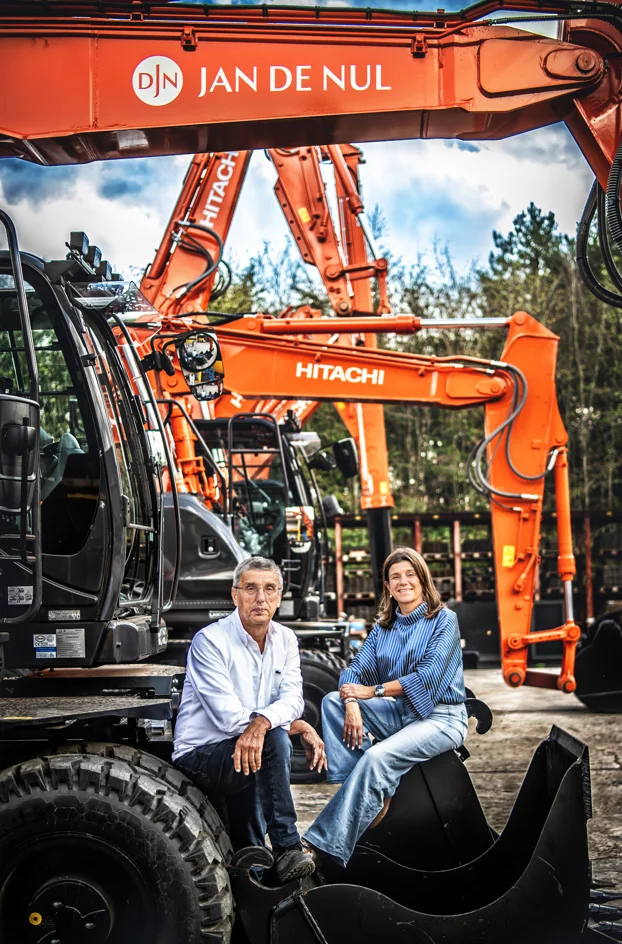
The Luyckx Group is a specialist distributor of machinery for civil engineering, materials handling and agriculture. This includes excavators, wheel loaders, tractors and truck-mounted cranes. The company fully customises these to meet the needs of its customers, including dredging firm Jan De Nul and construction companies Aertssen Group and Besix. That’s quite an impressive portfolio for a business that came into being because a farmer’s son didn’t want to work on the family farm.
In the 1950s, his father, Louis Luyckx, would cycle round the neighbourhood clearing bushes. This work was part of a large-scale land-use conversion project in which woods and heathland had to make way for farmland. “At first, he did that by hand,” says his son, Jos Luyckx (70). “Later, he bought a tractor. He fitted an excavator to the rear of it. People in the neighbourhood who saw him driving around wanted to buy his tractor. That’s how the business began. Our mother, Céline, did initially help out on the family farm. That continued until the barn was converted into a workshop with a welding station.”
Over the course of 75 years, Luyckx has become a leading name in its sector. The family business is the exclusive regional distributor for, amongst others, the Japanese machinery manufacturers Hitachi and Kubota, as well as European machinery brands. In addition to branches in its home towns of Brecht and Izegem, Luyckx contributes to countless prestigious projects in the Middle East through its subsidiary, Middle East Crane Equipment Trading, based in Dubai. The company, with 250 employees, achieved a consolidated turnover of nearly 210 million euros in 2025.
How does a company thrive in such a niche sector?
JOS LUYCKX. “It all started with our father, his tractor and the crane. After that, it never stopped. In the early years, these were smaller projects. The big breakthrough came in 2003 when Jan De Nul became the main contractor for the construction of the Jebel Ali Palm Island in Dubai. The company was looking for a partner who could supply specialised machinery with long booms for the construction of breakwaters. We seized that opportunity with both hands.”
CHANTAL LUYCKX. “Taking risks is in our DNA. Civil engineering, materials handling and agriculture are the three cornerstones of our business model. We also have a Luyckx Special Applications department to customise the machinery. When customers have a special request, our eyes start to light up. Together with our team, we assess the customer’s technical requirements and adapt the machinery accordingly. Often, the base machine is modified so extensively that it is barely recognisable as the original model.”
“We’re stubborn entrepreneurs, and more doers than thinkers. If our gut feeling is right, we’re not afraid to take the plunge. Especially when it comes to Jos’s expertise. He knows the trade and can make decisions. We don’t need to hold meetings about that.”
Isn’t it a challenge, then, to strike a balance between tradition and innovation?
JOS LUYCKX. “That happens naturally. We rarely say no to customers’ requests. We have a brilliant team that’s always looking for the best, most innovative solution. It helps that we’re out on the shop floor from morning till night. We know the projects and understand what’s at stake. That’s how we combine historical knowledge with progress.”
Is that enough to keep growing under our own steam?
JOS LUYCKX. “We live frugally. We reinvest all the money that comes in to help the business grow. I think it’s important to remain independent of banks.”
CHANTAL LUYCKX. “Luyckx is 100 per cent a family business. We are fully in control, so we can run things our own way. We want to grow within our current segment and do even better. Our Luyckx Special Applications division was a significant investment. We’re not yet getting the most out of it. There’s still a lot of potential there. Takeovers and mergers aren’t our thing, although we’re getting a lot of enquiries about them at the moment. The sector is struggling and the distribution model is under pressure.”
How so?
JOS LUYCKX. “The market for civil engineering machinery is shrinking by an average of 12 per cent this year. At the same time, Chinese brands are flooding the market. A price war was already raging, and now they’re also competing against each other. Companies that distribute premium brands are running into difficulties.”
CHANTAL LUYCKX. “We’re now looking at how we can adapt our services accordingly. For example, we’re considering offering small excavators via a leasing model.”
Are Chinese brands also making their mark in the Middle East?
JOS LUYCKX. “Absolutely. In the Middle East, manufacturers sell directly to companies rather than through dealer networks. As a result, the purchase price is very low, but there is hardly any after-sales service or customer support. We do offer that, though. That works in our favour.”
“The Iran conflict has brought the entire region to a standstill. It’s a catastrophe. Since February, we’ve been waiting for 31 large machines due to be delivered from Japan via the Strait of Hormuz. The ship was grounded for weeks. The machines were subsequently unloaded in China and are now back at the manufacturer’s premises. According to the latest update, they’re now due to be transported to Oman and then arrive in Dubai by road. In the meantime, transport costs have risen tenfold.”
Why did Luyckx set up there?
JOS LUYCKX. “We followed Jan De Nul when they were commissioned to build Palm Island and we supplied 56 large excavators, mainly fitted with super-long fronts (extended arms). The projects kept coming in. In April 2004, I put a brilliant mechanic on a plane to represent us locally. He’d only been to school until he was fourteen, had never flown before, and spoke only Flemish …”
CHANTAL LUYCKX. (interrupts) “I quickly slipped him a beer mat with a few English phrases on it, such as ‘I lost my way’. He’s actually our cousin, Wim. His mother rang our father to say they couldn’t cope with him at school any longer and asked if he could give him a job in the company. He’s now the CEO and runs our company there with 40 employees.”
JOS LUYCKX. “His first service vehicle for getting around the palm islands was a bicycle with a small crate on the back. After that, we did invest heavily to keep him there. (laughs) When the banking crisis hit, we had a moment’s hesitation. We had a large fleet of machinery there, but all the construction sites were shut down. In the end, we stayed to continue supporting our customers. Not long after, we officially set up Middle East Crane Equipment Trading.”
CHANTAL LUYCKX. “Jan De Nul is at the heart of our growth spurts. The company has been a customer for over 40 years now. When we introduced the Hitachi brand in 1982, they purchased machinery. Afterwards, we were able to assist with the palm islands. And today we’re seeing the same pattern repeat itself. We are increasingly being involved in projects where a standard machine is not sufficient. A very concrete example is the construction of a new rock-dumping vessel with a loading capacity of 36,000 tonnes. They are investing in a new rock-placement vessel, named the George W. Goethals, designed to protect critical subsea infrastructure, such as cables and wind turbine foundations.
Article published on 22 October 2026 in the Trends supplement, Gids Familiebedrijven
Photos: Debby Termonia